


BuddiesHR Overview: Market, Product, and Constraints
Company: BuddiesHR, a bootstrapped SaaS
Product: Slack native culture tools for small and mid-sized teams, birthdays, kudos, rituals, random coffees, and performance reviews.
Market: Employee engagement and HR tech, crowded, mature, and highly competitive by 2023.
Stage: 43k MRR in 2025.
Marketing Team: Two founders plus a small set of external specialists. No in-house marketers, no channel owners, no growth team.
From $6M Venture-Backed Growth to Bootstrapping
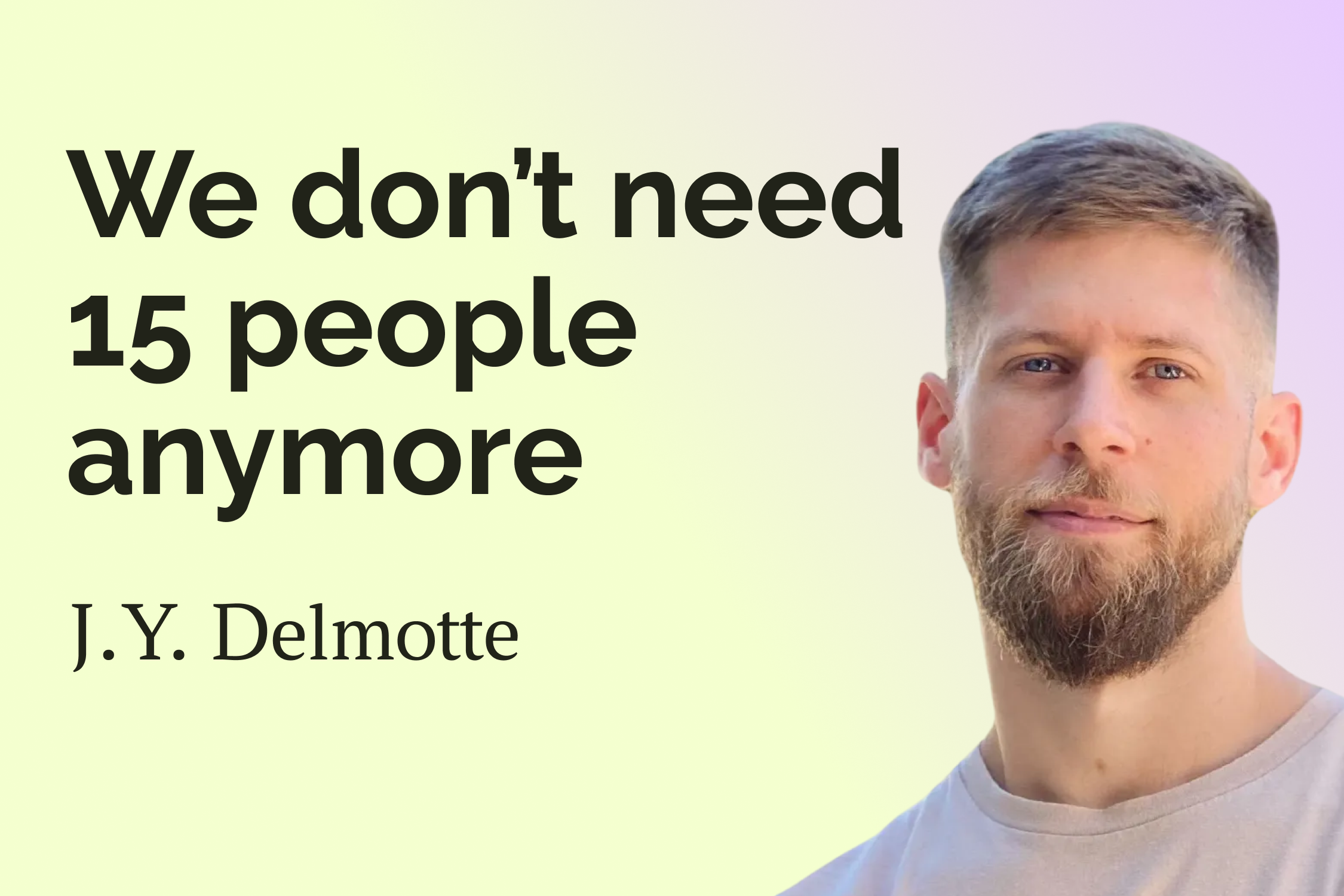
Behind BuddiesHR are two repeat founders, J.Y. and Fabien. Before this startup, they built PaletteHQ, went through Y Combinator, raised about 6 million dollars in 2021, and grew to a 15-person fully remote team across North America and Europe.
When they started BuddiesHR in 2023, they deliberately went the other way. No big team, no “grow at all costs,” no sales army. Today, the company is still just the two founders plus a network of freelancers, agencies, and very specific consultants for things like SEO and content.
From Discovery to Distribution: How Product Design Dictates Marketing
Before scaling features or investing in channels, J.Y. spoke directly with 40+ HR managers, team leads, and founders. Those conversations surfaced a simple pattern. HR teams hated adding new tools. Every extra login meant friction, onboarding, and internal pushback. Slack was already open all day, so anything outside of it felt like work.
This insight killed many obvious ideas early and pushed BuddiesHR toward a clear decision: the product had to live entirely within Slack.
Turning One Feature Into a Growth Channel
The first BuddiesHR app solved a single, obvious problem: birthdays in Slack. The feature was intentionally small, which kept installation and activation friction close to zero. Value was visible to the whole team without onboarding, training, or internal selling.
That sounds silly at the beginning, but it’s actually what made our success.
J.Y. Delmotte co-founder at BuddiesHR
Once installed, the app created an internal pull. Employees interacted with it, HR saw engagement, and adding more tools felt like a logical extension rather than a new purchase. One feature quietly became the main entry point for expansion.
Slack Marketplace as a High-Intent Acquisition Channel
Slack Marketplace became the primary growth engine for BuddiesHR. Users arrived with extremely high intent, no education was required, and the problem matched the context perfectly. If someone searched inside Slack, they already knew what they wanted and where they wanted it to live.
Early growth came from execution, not luck. The team optimized keywords within the marketplace, sharpened positioning, and iterated quickly on listing copy and visuals until the value was clear within seconds. Competition was still low at the time, which made ranking achievable. That window is mostly closed for HR tech today, but for BuddiesHR, it created a focused, repeatable channel that outperformed everything else.
Why Outbound Sales Failed in HR Tech
Outbound worked only at the very beginning, when the goal was to learn, not to sell. Reaching out to HR leaders helped validate problems, language, and objections. The moment those messages turned into sales pitches, response rates dropped to near zero.
If you try to sell to HR, they are over-solicited by email, on LinkedIn, etc. It’s one of the most saturated markets.
The reason was structural. HR inboxes are flooded, buyers are heavily over-solicited, and most sales emails look exactly the same. Outbound delivered insights, but it could not deliver revenue. Once that became obvious, the channel was cut, and attention shifted to channels with built-in intent.
Why Paid Ads Did Not Work for a Low-ACV SaaS
Paid ads were tested early across all major platforms: Google, Meta, LinkedIn, Reddit, and Quora. The goal was to understand whether paid acquisition could work for a low ACV, self-serve HR product. The result was consistent: the cost per signup hovered around $500, far above what the pricing model could ever recoup.
Because unit economics did not work, paid traffic was paused entirely. Scaling spend would only have amplified losses. With no sales team and no high-ticket contracts to offset CAC, ads violated the core constraint of the business; every channel had to pay back fast.
Ads returned later under a different logic. Spend was limited to the highest LTV, bids focused on competitor keywords with clear intent, and traffic was sent to direct comparison pages instead of generic landing pages. This setup finally showed early positive signals, but it required patience, tight scope, and brutal prioritization to avoid repeating the same mistake.
How AI-Generated SEO Pages Hurt Domain Performance
At some point, BuddiesHR went all in on AI-driven SEO. Pages were generated programmatically, topics were broad, and the main goal was coverage. Content was being published fast, but without a clear focus on who it was for or how it connected to signups.
We listened to podcasts and SEO gurus and just did whatever they said... We were just looking at Search Console and as long as it was growing, we were happy. But guess what? It wasn’t.
The result showed up quickly. Thousands of pages ended up in the index, many of them low quality or not ranking at all. Instead of helping, this volume started to hurt the domain.
The turning point came after talking to an SEO consultant. The recommendation was painful and straightforward: most of these pages had to go. They removed a large portion of the content and redirected aggressively to clean up the site and reduce index bloat.
The SEO Strategy That Started Working
From there, the approach changed completely. BuddiesHR defined four core topic areas and rebuilt SEO around them. Pages were consolidated instead of multiplied, and performance was reviewed regularly. What mattered was not traffic, but whether SEO pages actually led to signups.
Since that reset, organic growth has been stable, even through Google updates. AI did not disappear from the process, but its role changed. It is now used to speed up writing and execution while keeping strategy and decisions human.
Does LinkedIn Work as a B2B SaaS Acquisition Channel?
LinkedIn is not a core acquisition channel for BuddiesHR. In most months, it generates between zero and ten leads. Sometimes none. If judged purely on lead volume, it would have been cut a long time ago.
It stays for different reasons. LinkedIn brings podcast invitations, brand visibility inside the HR and SaaS bubble, and warm conversations that do not start from zero. It creates context before the first message and lowers friction when an intro finally happens.
I have a love-hate relationship with LinkedIn because every day I want to stop publishing, since it’s not bringing a lot of leads.
The current strategy is simple and manual by design. Commenting instead of chasing reach, working with curated engagement lists, and interacting one-to-one before expecting anything back. AI is tested only in tightly controlled ways, mostly to support research or drafting, never to automate relationships.
LinkedIn is treated as a long-term asset. It compounds slowly through trust, familiarity, and reputation. Not a growth hack, not a lead machine, but a place where future opportunities quietly form.
How to Test Marketing Channels With a Small Team
BuddiesHR never bets on a single channel. The model is deliberately conservative, with one core channel that already works, and two or three experiments running in parallel at all times. This protects the business from sudden drops while keeping learning continuous.
The Slack Marketplace remains the base. It delivers consistent, high-intent installs and sets the floor for growth. On top of that, SEO is treated as a compounding channel, slow to start, but resilient over time once the foundation is right.
Everything else runs as a controlled experiment. Paid ads are tested in narrow setups with strict CAC limits, Reddit is explored for niche discussions and intent signals, and LinkedIn is used for long-term brand building rather than lead volume. Channels are not “paused” out of hope; they are killed quickly if unit economics do not work.
Takeaways and Advice for SaaS Founders
- Customer discovery is not optional. It is your first channel.
- Product design determines distribution.
- High-intent channels beat scale every time.
- Outbound fails fast in saturated markets.
- Paid ads need pricing power first.
- AI SEO without strategy will hurt your domain.
- Brand can exist inside ecosystems, not just on Google.
- Fewer channels, tested deeply, win.
Growth did not come from hacks. It came from saying no, over and over again.
This article is adapted from a podcast episode where J.Y. Delmotte, co-founder of BuddiesHR, openly explains how they approached marketing in a bootstrapped HR tech SaaS, which channels worked, and which ones completely collapsed.
Watch the episode on YouTube or listen on Spotify.
